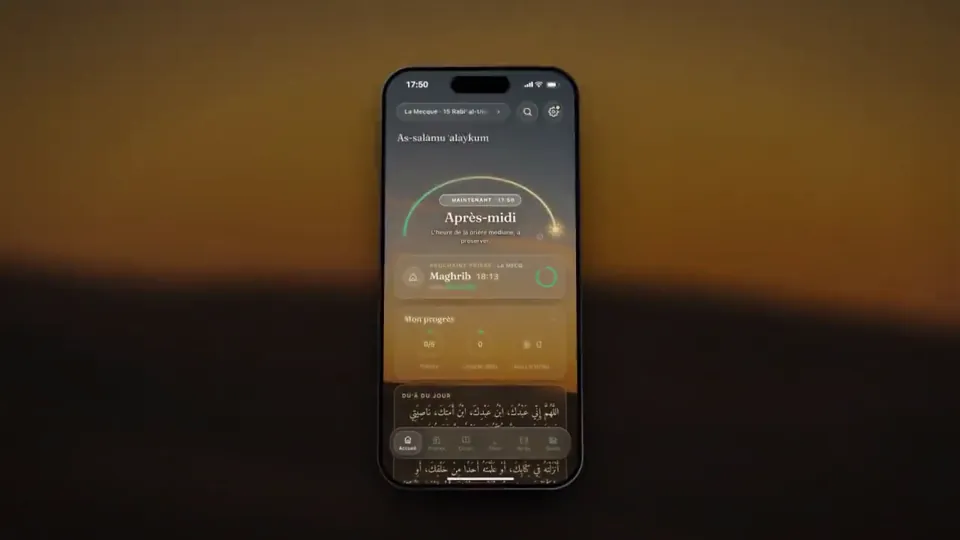
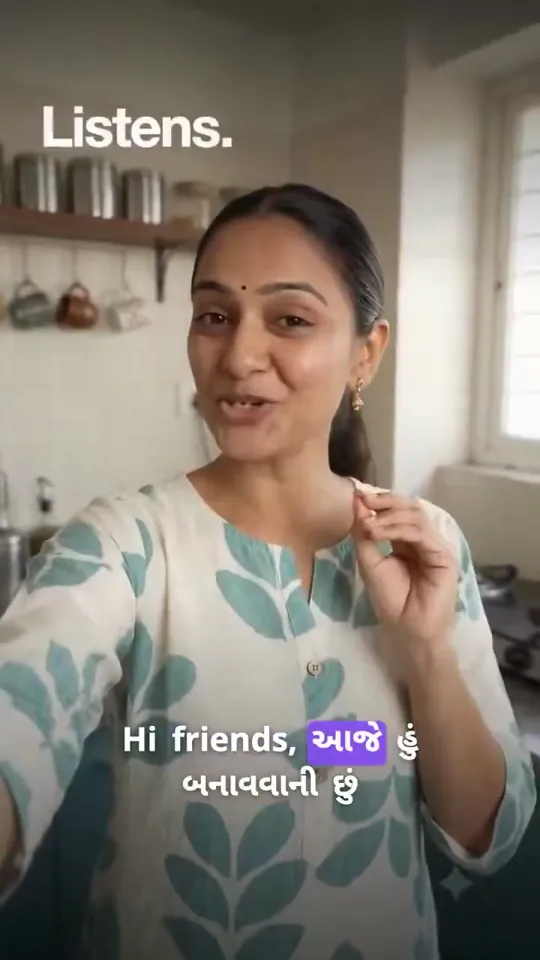
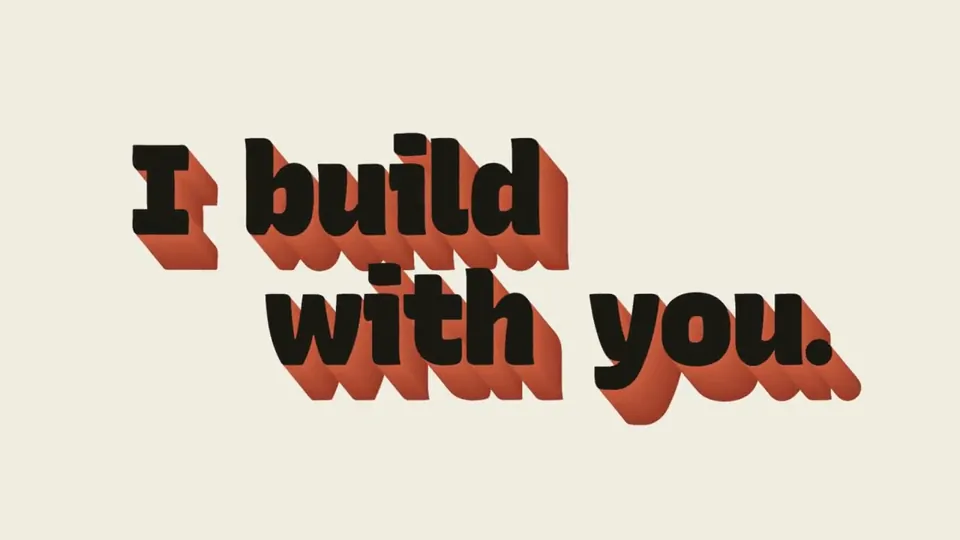
 Motion graphics0:10make a dynamic 10-second motion graphics video that shows who are you as Opus 5.5 - be as creative and dynamic as possible. Avoid the frames and texts on the corners which are typical ai made giveaways!
@souravbhar871Canvas
SCENE CONTEXT
Night side of the Earth. A space station in orbit; 📷@mila is inside at a small round porthole, 📷@astronaut floats outside it on a tether, lit by the station's floodlight against black space and the dark Earth with its city lights. They clown for each other through the glass; a meteor flies into the sky behind him and crosses toward the Earth; she hammers the glass and screams to make him turn, and he answers with a heart; he begins a slow turn and the meteor hits while he is halfway round; she watches the impact with one tear. 25 seconds, seven cuts between two camera positions: OUTSIDE, looking at the window from space, and INSIDE, her own eyes looking out through the porthole.

LOCATION MAP
THE WINDOW IS SMALL: a porthole about 50 cm across. Her head in its white cap takes up half of its diameter and her shoulders are wider than it; the astronaut's helmet alone is two thirds of its width; the whole window is a quarter of his height. A porthole, not a dome, not a bay window, one small circle in a huge wall of hull.
THE SHIP, INSIDE: the porthole set in a wall of white padded panels. Its inner ring is dark grey bolted metal with red-and-white striped segments at the lower left and lower right; a warm LED strip runs along the top of the ring inside. The interior is dim, blue-grey, a few small status lights, cable runs and a handrail at the edge of frame. The glass is thick and clear.
THE SHIP, OUTSIDE: the same porthole from space, a raised dark metal collar with bolts set into a white hull of quilted insulation panels with grey seams, many panels tall, dwarfing the window; a small white floodlight on a short stalk above the window, aimed down across the glass and out toward the astronaut; the interior glows warm through the glass, and the same red-and-white segments of the inner ring show through it.
THE EARTH: night side, black-blue, city lights in gold clusters and threads across the dark continents, a thin blue-green airglow line along the limb, stars above the limb. No sun, no daylight anywhere in the film.
INSIDE view: the ring fills the edges of the frame. The Earth is not a ball: it is a huge gentle arc, its night surface filling the lower 65% of the window, the limb a shallow curve running above the centre of the window, lower on the left and higher on the right, with a thin blue-green airglow line along it and black star field above. The exact CENTRE of the window is dark Earth surface with city lights, just below the limb: that is where the impact lands. The astronaut floats at the LEFT edge of the window, upper-left, within the left third, about 3 m away, against the black sky and the limb, facing the window; he never crosses into the centre. The meteor crosses the black upper right and comes down-left to the centre. Her right gloved hand enters from the bottom-right edge.
OUTSIDE view, close: 📷@mila behind the glass, the dim interior behind her; no Earth in frame; the Earth and the meteor are behind the camera, to screen left, and appear only as faint reflections on the glass.
OUTSIDE view, wide (CUT 1 only): the camera 9 m away, almost side-on, 70 degrees off the window's axis. The hull is a wall on the LEFT third of the frame, top to bottom, seen nearly edge-on; the porthole in it at middle height, seen as an upright narrow oval, her face in profile through the glass; the astronaut in the CENTRE-RIGHT of the frame, in profile, facing the window on the left, four times the height of the window; the night Earth in the bottom third, black space and stars above.
Geometry, fixed for the whole film: from outside, her right hand is on the screen-LEFT side, the astronaut is on the screen-RIGHT side, and the meteor and its impact are behind the outside camera to screen left, never in frame from outside.

FIRST FRAME / BLOCKING
OUTSIDE, wide, 9:16, the side view. Already in motion: both of 📷@astronaut's gloves are on the hull either side of the window's collar, his body straight out from the hull, his visor 30 cm from the glass; inside, 📷@mila's face is pressed to the glass, nose flattened against it, cheeks puffed, both palms flat on the glass either side of her face, laughing. Neither looks toward the camera; they look only at each other.

FORMAT MODE
Seven cuts.

CUT 1, 0:00 to 0:03, OUTSIDE, wide side view:
At 0:00.5 he pushes off the hull with both hands, gently, and drifts straight back from the window toward screen right, slowly, at a constant speed, about 1.5 m over the cut, no further, his feet trailing, his body rolling a few degrees, the white tether uncoiling in a short lazy loop between his hip and the hull. He raises his right glove into a thumbs-up toward her and holds it. Inside, she pulls her face off the glass laughing, waves at him with one hand in the small window, wiggles her shoulders in a little dance, then puffs her cheeks again and presses her nose back to the glass. Her eyes stay on him. NO meteor in this cut; nothing in the sky but stars. Last frame: he hangs 1.5 m from the window, thumbs-up raised, facing her; her face fills the small window, laughing at him.

CUT 2, 0:03 to 0:06, INSIDE, her eyes:
The porthole's circle fills the width; he is at the left edge of the window, about 3 m out, facing us, his thumbs-up opening into a slow wave, the wave rolling his body a few degrees; her right gloved hand is already mid-wave at the bottom-right edge, back of the hand to camera. At 0:03.5 the meteor FLIES INTO the frame at the top-right corner of the window, far behind him, entering from the side on a diagonal aimed at the centre of the window, at the pace of a slow aircraft across the sky. It looks like real orbital footage of a bolide: a bright white head about the size of his helmet, and behind it a long smooth tail of light, a continuous soft-edged ribbon ten helmet-widths long, white near the head fading through pale orange to nothing, brightest at the head and dimming evenly along its length. The tail is pure light, like a long-exposure streak: no sparks, no embers, no particles, no flames, no flicker, no trailing debris. The head is never larger than his helmet. He does not see it. Her hand waves twice more; at the end of the cut it stops mid-wave and freezes.

CUT 3, 0:06 to 0:08, OUTSIDE, close on her face through the glass:
Her face fills the window from the top of the cap to the neck ring, the ring cutting the left and right edges. First frame: she is still smiling, her right gloved hand up beside her face on the screen-left side, frozen mid-wave. Her eyes shift to screen left and up, toward the meteor behind the camera. The smile goes; she swallows; the lips close; the hand lowers. On the glass, faint: the gold specks of the city lights reflected across the lower third, and the meteor as a thin bright line reflected in the upper-left, creeping slowly; both faint, never over her eyes. Two seconds, nothing else moves.

CUT 4, 0:08 to 0:12, INSIDE:
For the first second nothing changes but the meteor: it reaches the Earth's limb just above the centre of the window and enters the air; the head brightens to a hard white point and the tail lengthens smoothly, and behind it, along the limb, a faint glowing trail of lit air lingers for a moment and fades. Still no sparks, no particles: a head and a smooth ribbon of light. Her hand hangs still at the bottom right. The astronaut keeps moving: he drifts slowly up and down along the left edge of the window, rolling a few degrees, one arm floating up to chest height, still facing us, warm, never leaving the left third. Then her hand closes and raps the glass three times with the knuckles and she shouts "Hey! HEY!"; the hand opens into a point, index finger extended toward the meteor at the centre of the window, arm straight, the glove shaking. The astronaut reads nothing. He brings both gloves together in front of his chest, fingers curved, thumbs down, into a heart shape, holds it for a full second toward her, the gesture rolling him slightly, then lets his hands float apart and drifts on. The camera leans 10 cm toward the glass.

CUT 5, 0:12 to 0:15, OUTSIDE, over the astronaut's shoulder:
Foreground lower right, out of focus: the back of 📷@astronaut's helmet and the top of his backpack, 1 m from camera, drifting slowly across the corner of the frame. Behind the glass, her from the waist up: she slams the glass four times with the flat right palm, fast, her left hand gripping the inner rim to brace, her body recoiling after each hit; between slams the right arm shoots out and the index finger jabs to screen LEFT, away from him, twice. She screams "BEHIND YOU!" and then "TURN AROUND!", the second louder, her eyes shining wet, no tear yet, her eyes going from him to where she points and back. On the glass, faint reflections of the city lights below and the meteor's bright line upper-left, never over her eyes. He does not turn; he drifts, facing the window, for the whole cut.

CUT 6, 0:15 to 0:21, INSIDE, exactly the framing CUT 4 ended on:
Her right palm is flat on the glass at the bottom right, fingers spread. The astronaut, at the left edge of the window, is still drifting and rolling, facing us; his helmet tilts toward her pointing arm. At 0:16 he begins to turn around on the spot, slowly and smoothly: his whole body rotates to his left, screen right, the suit's momentum carrying him, the tether swinging after him, his position staying at the left edge. At 0:17, when he is halfway through the turn, side-on to us, the meteor reaches the ground at the exact CENTRE of the window, well to the right of him, with clear sky and dark Earth between him and the strike; its tail fades out behind it in half a second.
The impact is SMALL and SLOW, seen from 400 km up. At 0:17 it is a pinpoint of white light at the centre, smaller than his glove, like one city light flaring. Over the next second it swells into a glowing orange dot the size of his glove, and a thin bright ring appears around it, the size of his helmet. The ring expands slowly and evenly, visibly slower than the meteor moved: two helmet-widths across at 0:19, three helmet-widths across at 0:21, and no larger; its edge is a thin bright line, the ground inside it a dull orange glow, the city lights inside it going out one by one as the ring passes them. Everything outside the ring is unchanged: the rest of the planet stays dark with its city lights on, the limb, the airglow and the stars exactly as before. At the centre a thin column of smoke begins to rise, no taller than his helmet by the end of the cut, its top just starting to spread and lit faintly orange from below. The glow is brighter than the city lights but never washes out the frame and never lights up the whole planet.
He keeps turning at the same slow speed, until by 0:19 his back is fully to us, his backpack toward the window, and he faces the Earth and the small fire. He never overlaps the impact: it sits at the centre, he stays a dark silhouette at the left edge, a faint orange rim on the right side of his suit and helmet, hanging there, drifting slowly, not turning back. She breathes "no". Her hand slides 5 cm down the glass and stops.

CUT 7, 0:21 to 0:25, OUTSIDE, EXACTLY the framing of CUT 3:
Her face centred in the window, her right palm flat on the glass at the lower left, her eyes turned screen left and down, wide, unblinking. A soft orange glow rises from screen lower-left, slowly, over two seconds, never a flash: onto the glass and her palm first, a faint orange reflection of the distant fire in the lower-left of the glass, then onto her face from below, the chin, the underside of the nose, the lower lids, warm and steady, a little brighter than the LED strip above her. She does not blink. Her lower lids fill. One tear breaks from her right eye, screen left, and runs down the cheek to the jaw, catching the orange light. Her mouth stays closed; the lower lip presses once. Hold on her face to the end; the glow holds.

OPTICS
CUT 1: about 35 mm equivalent, deep focus, the hull, the window, her profile and the astronaut all sharp, the Earth below slightly soft. INSIDE cuts: wide, about 24 mm equivalent, deep focus, the ring, the astronaut and the Earth all sharp, the glove close to the lens slightly soft. OUTSIDE close cuts: about 50 mm equivalent, shallow depth, her face sharp behind the glass, the ring soft; CUT 5 about 40 mm with the helmet soft in the foreground.

CAMERA
Every camera position is locked with a slow zero-gravity drift of a few pixels. INSIDE is her eyes: in CUT 4 it leans 10 cm toward the glass as she knocks; each palm slam in CUT 5 and the hand on the glass in CUT 6 give the frame a small shake that settles within half a second. No handheld wobble otherwise, no zoom, no move.

ACTION
📷@astronaut is NEVER still, in any cut: he floats in zero gravity, always drifting, always rolling a few degrees, his legs trailing, his free arm floating at chest height between gestures, the tether coiling and uncoiling; every gesture moves his body, a thumbs-up pushes him back a little, a wave rolls him, the heart rolls him. In CUT 1 one gentle push with both hands, then pure drift at a constant speed, under 1 km/h, no second push, no flailing, staying within 1.5 m of the hull. From CUT 2 on his drift stays within the left third of the window in every INSIDE cut. He moves like a man in a pressurised suit under water, under 2 km/h, arms from the shoulder, the helmet turning with the torso. He never stands, never hangs frozen in one spot. His one big movement is the slow 180-degree turn on the spot in CUT 6, which starts one second before the impact and is halfway through when it lands. The meteor enters at the top-right corner at 0:03.5, moves on one straight diagonal at a constant speed to the centre of the window, never changing direction, never accelerating, its head never larger than his helmet, a head and a smooth ribbon of light with nothing flying off it. The impact grows slowly: pinpoint, glove, helmet, two helmets, three helmets, over four seconds, and nothing beyond the ring changes. Her movements are fast and human; nose to glass, palms on glass, waving, knocking, slamming; the glove never passes through the glass.

PERFORMANCE
Her arc: clowning, playful, noticing, still, alarmed, frantic, watching, defeated. Clowning: a girl goofing for someone she loves, nose flattened on the glass, puffed cheeks, a shoulder dance, unguarded, laughing, eyes on him, never on the lens. Playful: a bouncing wave. Noticing: the smile goes out of the face before the hand knows it, the eyes move first, a swallow. Alarmed: knuckles, a straight pointing arm, the glove shaking, a shout. Frantic: the whole forearm behind the slams, the body recoiling, brows up, mouth wide on the screamed words, eyes shining, breath fast. Watching: the mouth opens for one whispered word. Defeated: nothing on the face moves except the eyes filling and the one tear; the stillness is the performance. No sob, no scrunched face, no blinking, no head shake in CUT 7.
The astronaut's arc: warm, warm, loving, turning, silhouetted. All suit, slow and rounded; he never rushes. The push-off in CUT 1 is a man stepping back from a doorway to look at her; the heart is sincere and unhurried, a man who thinks he is being flirted with.

PHYSICS
Zero gravity throughout: outside, the astronaut drifts and rotates continuously, the tether floats; inside, she braces on the rim to strike and recoils after each slam; nothing hangs, nothing falls. The glass is thick and clear, never flexes, never cracks, never fogs; her nose and palms flatten against it in CUT 1; from outside it reflects faintly what is behind the camera, the city lights and the meteor's line, and from CUT 7 the faint orange of the distant fire. The meteor is a body far away, seen as a bright head with a smooth luminous trail; the trail is glowing air, not particles, and it fades evenly. The impact is a real, distant event seen from orbit: a small fire on the ground, a ring of shock that expands at a steady, slow, visible pace, a column of smoke that rises slowly; it is a real light source but a small one, lighting the ground around it, the right edge of his suit faintly, and her face softly. His gold visor is a curved mirror: while he faces the window it reflects the porthole as a small warm circle of light with the LED strip along its top, the station floodlight as a bright point, and her as a small dark silhouette inside that reflected window, no facial features. Nothing is ever visible behind the visor.

LIGHTING
Night. Key on the astronaut: the station floodlight above the porthole, hard white, 5600 K, from above, deep unfilled shadow under his arms and on his lower body. Fill: faint gold glow from the city lights below, 2800 K. His helmet lamps are off. Key on her face from outside: the warm LED strip along the top of the ring inside, 3200 K, soft, from above and in front; fill: cool blue-grey cabin light from screen right, 6500 K, faint. From 0:17 a second source, orange, 2400 K, small and rising slowly: from inside it comes from the centre of the window, to his right, a faint rim on the right side of his suit; from outside it comes from screen lower-left, from below, a soft glow that by CUT 7 is a little brighter than the LED strip on her face, never a flash, never blinding.

AUDIO
One sound bed for the whole film, INSIDE the station, under every cut including the outside ones: a low ventilation hum. At 0:00.3 her laugh, close; the squeak of her palms and nose on the glass; a soft dull thud through the hull as his gloves push off. CUT 2: the rustle of the glove, her breath. CUT 3: her breath stops, a swallow. CUT 4: three dull knuckle knocks on thick glass with a short structural ring after each; "Hey! HEY!", close and loud. CUT 5: four flat palm slams, louder, a deep ring; "BEHIND YOU!", "TURN AROUND!", screamed, her breath ragged between them. CUT 6: the impact makes no sound, only the hum; "no", whispered; the glove squeaking down the glass. CUT 7: one long exhale, then the hum alone. Outside the glass there is vacuum: nothing she says reaches him. No music, no boom, no rumble.

STYLE
Photoreal live-action, modern digital cinema, clean sensor, no grain, deep clean blacks in the space and the night Earth. Hard single-source light with deep shadow, matching the project Look. No AI gloss, no glow particles anywhere, no sparks, no lens flare over her face. The meteor and the impact look like real orbital footage, not visual-effects fireballs.

POSITIVE LOCKS
- THE WINDOW IS SMALL: about 50 cm across, a quarter of the astronaut's height, his helmet two thirds of its width, her head in the cap half of its diameter, her shoulders wider than it. Never a large window, never a dome.
- 📷@mila 100% matches her reference sheet: face, white cap, white suit, neck ring, white gloves with grey fingertips. Sheet background and layout NOT inherited. No helmet on her, ever. She never looks at the camera.
- 📷@astronaut 100% matches his reference sheet: the white EVA suit, the backpack, the gold mirrored visor down, the US flag on his left shoulder and the black patch with the green infinity symbol on his chest, exactly as on the sheet. No face inside the helmet and no face reflected on the visor, ever: the visor shows only the reflected window, the floodlight and her dark silhouette. Sheet background and layout NOT inherited. He never looks at the camera.
- CUT 1: side view, 70 degrees off the window's axis, 9 m away, hull on the left, astronaut on the right facing the window; he starts directly in front of the window with his gloves on the hull, pushes off at 0:00.5, drifts right no more than 1.5 m. NO meteor in CUT 1.
- Night for the whole film: black space, the night Earth with city lights, no sun, no daylight, no blue daytime Earth.
- The Earth is a huge gentle arc filling the lower 65% of the window in INSIDE cuts, never a full ball, never a small planet in the distance.
- The meteor is a bright head about the size of his helmet with a smooth continuous ribbon of light behind it. NO sparks, NO embers, NO particles, NO flames, NO debris, NO flicker, ever. The head is never larger than his helmet.
- The impact is SMALL and SLOW: a pinpoint at 0:17, a ring the size of his helmet at 0:18, two helmet-widths at 0:19, three helmet-widths at 0:21, never larger. Nothing outside the ring changes; the rest of the planet keeps its city lights; the planet is never covered in fire, never washed out, never destroyed. No instant flash across the Earth.
- The impact is at the exact centre of the window. The astronaut stays within the left third of the window in every INSIDE cut and never overlaps the impact or the smoke.
- INSIDE cuts: the same porthole, same ring with its red-and-white segments, same Earth, same glove at the bottom right. CUT 6 returns to exactly the framing CUT 4 ended on.
- OUTSIDE close cuts: CUT 7 is exactly the framing of CUT 3. From outside no Earth, no meteor, no impact are ever directly in frame, only their faint reflections on the glass and the impact's soft light.
- Reflections on the glass are faint and never cover her eyes; her face is always sharp and readable.
- The sky is empty until 0:03.5; the meteor enters at the top-right corner at 0:03.5 and never disappears until impact. One meteor only, no meteor shower.
- Two people only: her inside, the astronaut outside. In CUT 5 he is seen from BEHIND only and never turns toward the camera. No second hand, no reflection of any person on the window glass.
- The astronaut faces the window and keeps drifting until 0:16; he begins his slow turn at 0:16, is side-on to us when the impact lands at 0:17, and from 0:19 to the end of CUT 6 his back is to us. He never looks at the meteor before the turn. He is never frozen: he drifts in every cut.
- One tear, from one eye, in CUT 7 only. No tears before that. No sobbing, no red nose, no open mouth in CUT 7.
- The glass stays whole: no cracks, no fog, no frost. No text, no letters, no numbers anywhere. The only markings in the film are the US flag on the astronaut's left shoulder and the green infinity patch on his chest, as on his sheet.
- No blood, no gore, no people on the ground. No title, no fade, no black frames.
- No theatrical eyebrows, no lip biting, no exaggerated gestures; nothing outside the glass moves fast.
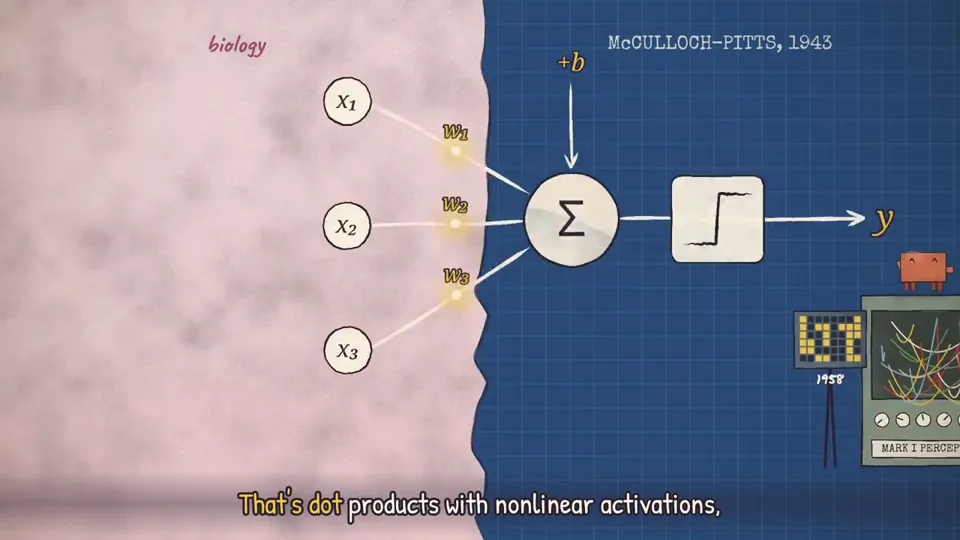 Motion graphics4:22I'd like you to make a music video in a similar style to this one:
https://github.com/JohnHeibel/PDoomVideo
To this song:
https://youtu.be/cobZuBii0Z0?si=ada6wxomeJbo-LRl
Don't feel the need to represent everything in the lyrics literally - feel free to include relevant references to concepts, events, and lore in the video, even if obscure (especially if obscure). E.g. when the lyrics say "when they say they're just predicting tokens...", you might depict a "stochastic parrot". That one's not particularly obscure but is the kind of thing I mean. Instead of depicting like, literally predict…
Motion graphics4:22I'd like you to make a music video in a similar style to this one:
https://github.com/JohnHeibel/PDoomVideo
To this song:
https://youtu.be/cobZuBii0Z0?si=ada6wxomeJbo-LRl
Don't feel the need to represent everything in the lyrics literally - feel free to include relevant references to concepts, events, and lore in the video, even if obscure (especially if obscure). E.g. when the lyrics say "when they say they're just predicting tokens...", you might depict a "stochastic parrot". That one's not particularly obscure but is the kind of thing I mean. Instead of depicting like, literally predict…