CreatorMotion · 標題接管場景


 +7
+7
安裝下面任一個 Skill,再請你的 Agent 做一部像這樣的影片。
作者只公開了部分提示詞。
Opus 5.5 turned one sentence into a 3D system that opens in Blender, rigged, textured and ready to animate.

It does not render the object. It constructs it, part by part, the way a modeller would if they had a week.

> PARSE - the sentence becomes a parts list with real dimensions, nothing implied
> MASS - each part built as clean geometry, quads only, no sculpted mush
> RIG - joints and pivots placed where the object physically bends
> SKIN - materials assigned per surface, scale and roughness set separately
> PACK - exported with a named hierarchy, so a human can edit one part

Image models stop at the render. What you get is a photograph of a thing that does not exist as a thing.

That gap appears the second someone wants to move an arm, swap a material, or send it to a printer.

Rigging is what nobody automates. Without pivots you have a statue, and a statue cannot be a system.

Topology beats detail every time. A dense mesh looks stunning in a screenshot and folds the moment it deforms.

Names carry through the whole export. Every part, joint and material reads the way a person would label it.

Studios burn days on modelling and cleanup before anyone gets to the creative part of the job.

The prompt format and what each stage returns are laid out underneath.
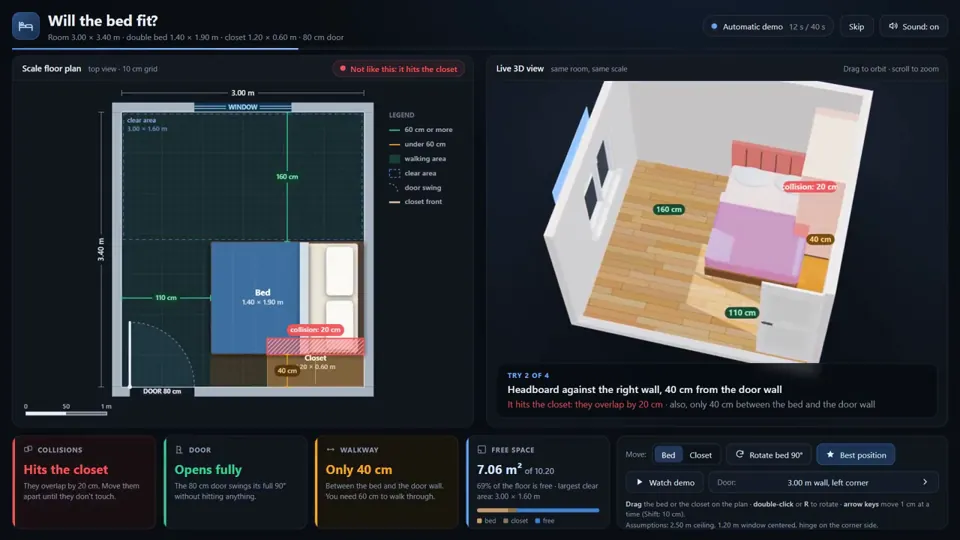 3D 場景0:42Esta app probó 3,932 posiciones de una cama matrimonial hasta encontrar dónde cabe.
La hizo Claude Opus 5.5 con un prompt mío: cuarto de 3.00 x 3.40 m, puerta de 80 cm, un clóset de 1.20 x 0.60 y la cama de 1.40 x 1.90.
Armó el plano a escala y el cuarto en 3D al lado, y los dos se mueven juntos.
Si la cama choca con el clóset, no deja abrir la puerta o te deja menos de 60 cm para pasar, te avisa.
Solo 108 posiciones no tenían ningún problema. La mejor deja 70 cm para pasar por cada lado.
Tardó 47 minutos, más 5 para pasarla a inglés, y no le corregí nada.
Para una mudanza, esto dice más…
3D 場景0:42Esta app probó 3,932 posiciones de una cama matrimonial hasta encontrar dónde cabe.
La hizo Claude Opus 5.5 con un prompt mío: cuarto de 3.00 x 3.40 m, puerta de 80 cm, un clóset de 1.20 x 0.60 y la cama de 1.40 x 1.90.
Armó el plano a escala y el cuarto en 3D al lado, y los dos se mueven juntos.
Si la cama choca con el clóset, no deja abrir la puerta o te deja menos de 60 cm para pasar, te avisa.
Solo 108 posiciones no tenían ningún problema. La mejor deja 70 cm para pasar por cada lado.
Tardó 47 minutos, más 5 para pasarla a inglés, y no le corregí nada.
Para una mudanza, esto dice más… 3D 場景0:15Opus 5.5 is good at 3d motion too apparantely
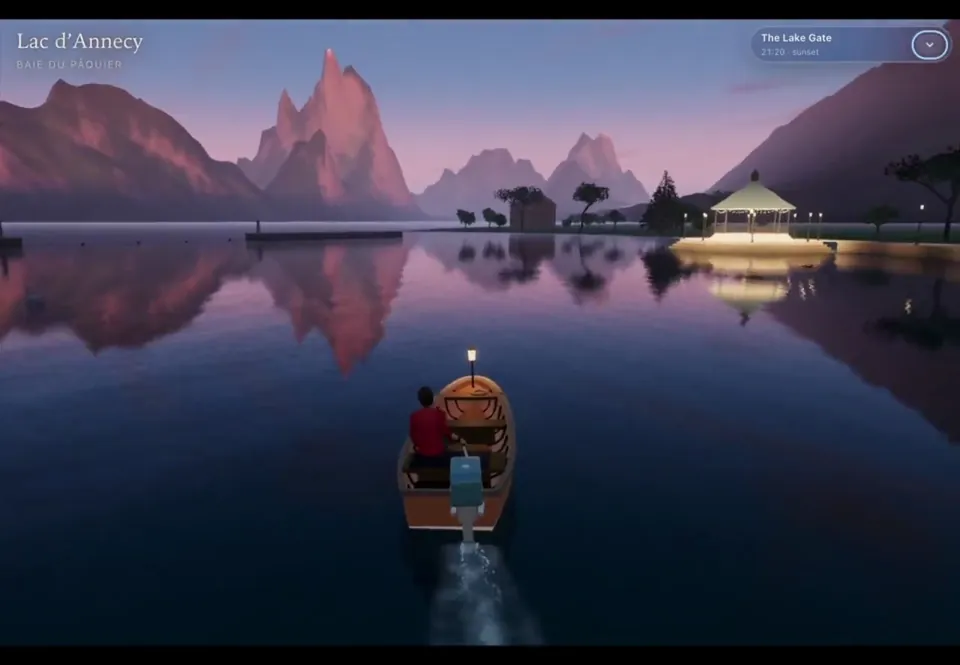 3D 場景0:20I wanted to see if beautiful destinations could become playable 3D experiences. Annecy, France became the prototype: a boat journey through canals, bridges, waterfront, and the mountain lake, built with Claude Opus 5.5 using Three.js + TSL.
I trimmed the navigation footage for the sake of keeping the video short and the post below below has a slightly longer version. The whole workflow behind this is simple:-
- Explained the concept to Opus and asked it to list some ideas.
- Shortlisted one and asked it to generate a prompt, with tech stack directions.
- Thats it, needed few iterations and is…
3D 場景0:20I wanted to see if beautiful destinations could become playable 3D experiences. Annecy, France became the prototype: a boat journey through canals, bridges, waterfront, and the mountain lake, built with Claude Opus 5.5 using Three.js + TSL.
I trimmed the navigation footage for the sake of keeping the video short and the post below below has a slightly longer version. The whole workflow behind this is simple:-
- Explained the concept to Opus and asked it to list some ideas.
- Shortlisted one and asked it to generate a prompt, with tech stack directions.
- Thats it, needed few iterations and is…