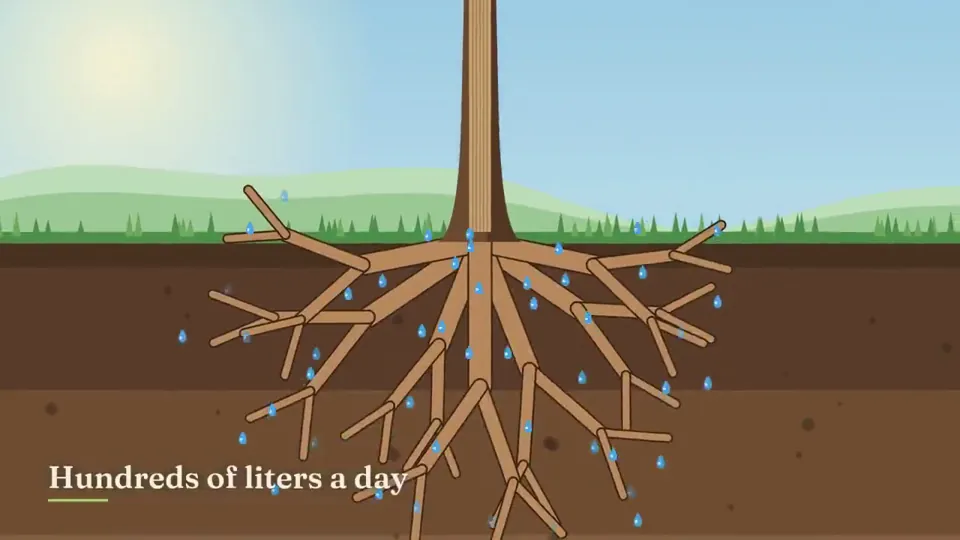
 Explainers0:32//Like most of you// I asked opus 5.5 (medium) to generate animation to explain "Tree as an ecosystem" with AUDIO - no fancy prompts just oneliner prompt - and it created this
@hunzaiCanvasWeb Audio
The author shared part of the prompt.
I asked opus 5.5 in @agnt_gg for the most realistic fire it could build using ONLY javascript.

It wrote a real 3D fluid simulation that runs on the GPU. The flame colors come from blackbody physics, the smoke is real volume, it runs at 96 fps in 1080p, and it critiqued its own renders about 40 times.

Then it shot a 38 second film of it. The sound comes from the fire itself. 🔥

Details:

- Nothing faked. The fire is actual simulated gas that burns, heats up, rises, and swirls. It gives off soot that glows, and the soot that escapes cools into smoke. Every frame is computed on the GPU.

- The AI graded its own work: render a frame, have a vision model pick it apart like a VFX supervisor, fix it, repeat. It caught a flame that kept dying, ring shaped artifacts on the ground, and coals that looked like cheese chips.

- The film isn't screen recorded. Each frame is rendered offline with scripted camera moves. The crackle and roar come from how brightly the fire burns in each frame.

- No Blender, no stock footage, no sound library. One HTML file, one conversation.
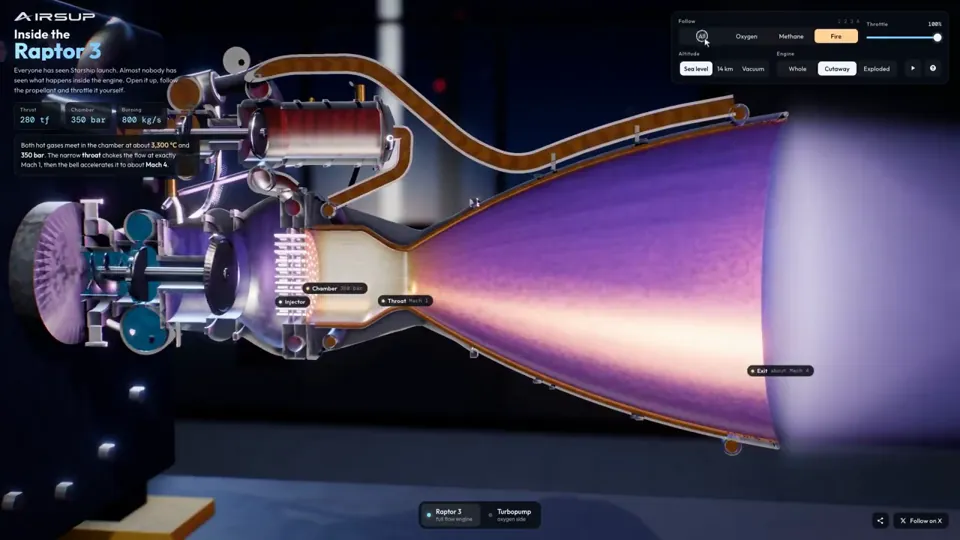 Explainers0:35I asked Claude Opus 5.5 to explain how a rocket engine works by building an interactive Raptor 3 you can take apart in your browser.
Cut it open, follow the oxygen and the methane through both turbopumps, then throttle it and watch the shock diamonds move.
http://airsup.ai/rocket-engine
Explainers0:35I asked Claude Opus 5.5 to explain how a rocket engine works by building an interactive Raptor 3 you can take apart in your browser.
Cut it open, follow the oxygen and the methane through both turbopumps, then throttle it and watch the shock diamonds move.
http://airsup.ai/rocket-engine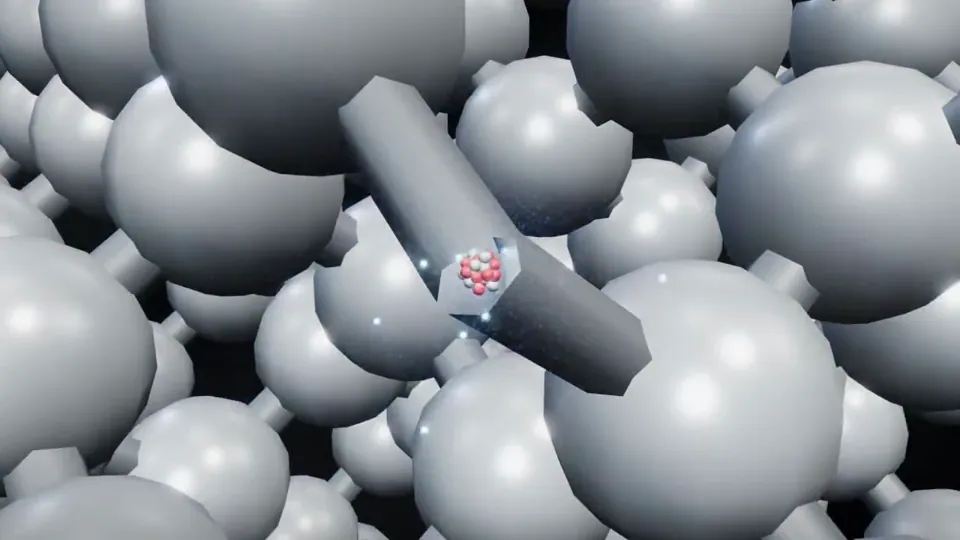 Explainers0:22Opus 5.5 just turned a smartphone into a 20-second trip from glass to atoms.
It starts on the phone, dives through the motherboard and chip, then keeps going through the semiconductor structure until you’re basically staring at the atomic scale.
This is the kind of 3D shot that normally looks like a whole studio touched it.
Instead, Opus 5.5 built the sequence.
That’s fucking ridiculous.
Explainers0:22Opus 5.5 just turned a smartphone into a 20-second trip from glass to atoms.
It starts on the phone, dives through the motherboard and chip, then keeps going through the semiconductor structure until you’re basically staring at the atomic scale.
This is the kind of 3D shot that normally looks like a whole studio touched it.
Instead, Opus 5.5 built the sequence.
That’s fucking ridiculous.